When winter settles over Queens, a dependable heating system is not simply about comfort. It affects how you live, work, sleep, and use your property every day. A boiler that loses pressure, a furnace blowing cold air, or a heat pump struggling to keep up can quickly turn into a problem that needs attention.
Queens HVAC Heating provides heating services for homes and businesses throughout Queens, NY. We work with different types of heating equipment and help with everything from unexpected breakdowns and performance problems to regular maintenance and new system installations.
Whether your property relies on a boiler, furnace, heat pump, radiant heating system, or ductless equipment, the first step is understanding what is happening and why. From there, you can make a more informed decision about repair, maintenance, or replacement.
Heating systems vary considerably across Queens. An older home may depend on a boiler and radiators, while another property uses a gas furnace, a modern heat pump, ductless mini-splits, radiant heating, or a combination of different systems.
Each type of equipment heats a property differently and develops its own set of potential problems. That is why a one-size-fits-all approach does not work particularly well with heating systems.
Our heating services cover the full life cycle of your equipment. If the system is not working properly, our heating repair services focus on finding the cause. If you want to reduce the risk of unexpected problems, regular heating maintenance can help identify developing issues. When an older system reaches the point where replacement becomes the practical option, our heating installation services help you explore a new solution for the property.
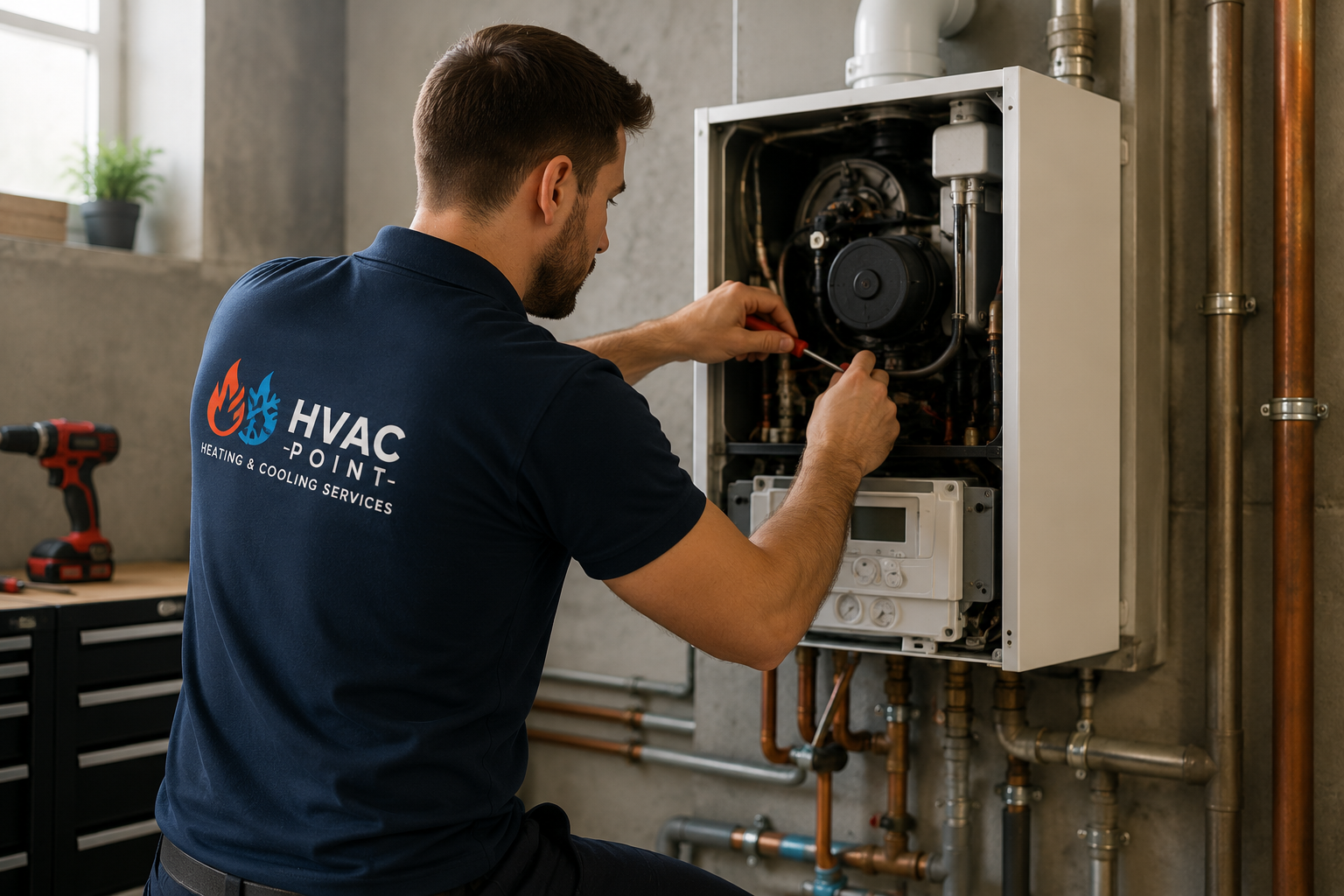
The right approach to a heating problem depends heavily on the equipment involved. A boiler does not operate like a furnace, and a heat pump has very different characteristics from either one. Understanding those differences is essential when diagnosing performance problems or considering replacement.
Boilers are common throughout New York, particularly in older homes and buildings. Instead of heating air, a boiler heats water that circulates through radiators, baseboards, or radiant heating systems.
A well-performing boiler can provide steady and comfortable heat, but problems with pressure, circulation, pumps, valves, controls, ignition, or other components can affect the entire system. Warning signs may include leaking water, cold radiators, unusual noises, pressure loss, delayed heating, or rooms that never seem to get warm enough.
Our boiler services in Queens cover repair, installation, and maintenance for different boiler systems.
Furnaces heat air and move it throughout a property using ductwork. Depending on the equipment, a furnace problem may involve ignition, burners, the blower motor, electrical components, thermostats, filters, or airflow.
Cold air coming from vents, weak airflow, frequent cycling, unusual smells, new noises, or a furnace that refuses to start can all indicate that something needs attention.
Learn more about our furnace services in Queens, including dedicated repair, installation, and maintenance solutions.
Heat pumps work differently from traditional boilers and furnaces. Rather than creating heat through combustion, they transfer heat and can provide both heating and cooling from the same system.
Modern heat pumps can work effectively in many properties, but equipment selection, sizing, installation quality, building characteristics, outdoor conditions, and ongoing maintenance all affect performance.
Our heat pump services cover existing system problems, maintenance, repair, and new installations.
Radiant heating warms surfaces within a property rather than relying primarily on forced air. Depending on the system, heat may be distributed through floors, walls, ceilings, radiators, or other components.
When radiant heating develops problems, symptoms may include cold areas, uneven temperatures, slow warm-up times, circulation issues, leaks, or controls that are not working correctly.
Explore our radiant heating services for more information.
Ductless mini-splits provide heating and cooling without traditional ductwork. They can be useful for individual rooms, additions, apartments, or properties where installing conventional ducts is impractical.
Because each indoor unit can serve a specific zone, ductless systems also offer flexibility for properties with different comfort needs in different areas.
Learn more about our ductless mini-split heating services.
Heating problems can develop for many different reasons. Sometimes the issue is isolated to a single component. In other situations, several factors may be affecting system performance at the same time.
The exact cause depends on the type of equipment, its age, maintenance history, installation, and the symptoms you are experiencing. Some common causes of heating problems include:
This is why diagnosing heating equipment based on one symptom alone can be misleading. For example, a furnace blowing cold air could involve the thermostat, ignition system, airflow, burners, or another component. A boiler that is not heating radiators properly could have a circulation problem, trapped air, pressure issue, valve fault, or another cause.
Some heating problems are impossible to miss. Others start with small changes that become more noticeable over time. Paying attention to unusual behavior can help you recognize when the equipment may need to be inspected.
A developing problem does not always mean you need a new heating system. In many cases, a repair can restore reliable performance. The important thing is identifying what is causing the symptoms before the issue becomes more disruptive.
One of the most common questions property owners face is whether a heating system should be repaired, maintained, or replaced. There is no single answer that applies to every situation.
Repair often makes sense when the equipment is otherwise in reasonable condition and the problem can be traced to a specific component or isolated issue. A thermostat problem, failed control, ignition issue, circulation fault, or worn component does not automatically mean the entire system has reached the end of its useful life.
If your system has stopped heating properly, our heating repair services in Queens provide a dedicated starting point.
Maintenance is intended to help keep equipment operating properly and identify developing problems before they become unexpected breakdowns. The work involved varies by system type because boilers, furnaces, and heat pumps have different components and service requirements.
Regular heating maintenance can be especially valuable before winter places sustained demand on the system.
Replacement may become a practical consideration when equipment is aging, repairs are becoming frequent, a major component has failed, parts are difficult to obtain, or the system can no longer provide reliable comfort.
The decision should consider more than age alone. Overall condition, repair history, energy performance, system sizing, property needs, and the cost of continuing to maintain existing equipment all matter.
Our heating installation services provide more information for property owners considering a new system.
There is no single heating system that is automatically best for every Queens property. Each option works differently and may be better suited to certain buildings, existing infrastructure, comfort preferences, and long-term goals.
Boilers use heated water to distribute warmth through radiators, baseboards, or radiant systems. They are particularly common in older New York properties and can provide steady, comfortable heat without relying on forced air.
Furnaces heat and distribute air through ductwork. Properties that already have suitable ducts may use the same distribution system for both heating and central air conditioning.
Heat pumps transfer heat and can provide both heating and cooling. Modern cold-climate equipment has expanded the situations in which heat pumps can be considered, although property characteristics and system design remain important.
Some heating issues are primarily comfort problems. Others can involve immediate safety concerns and should be treated differently.
Potential warning signs include a gas odor, suspected carbon monoxide, visible smoke, electrical burning smells, sparking, or other signs of an immediate hazard. If you believe there is a gas leak, carbon monoxide problem, fire risk, or another immediate danger, leave the affected area and contact the appropriate emergency service or utility provider rather than trying to diagnose the equipment yourself.
For urgent heating breakdowns that do not involve an immediate life-safety emergency, learn more about our emergency heating repair services in Queens.
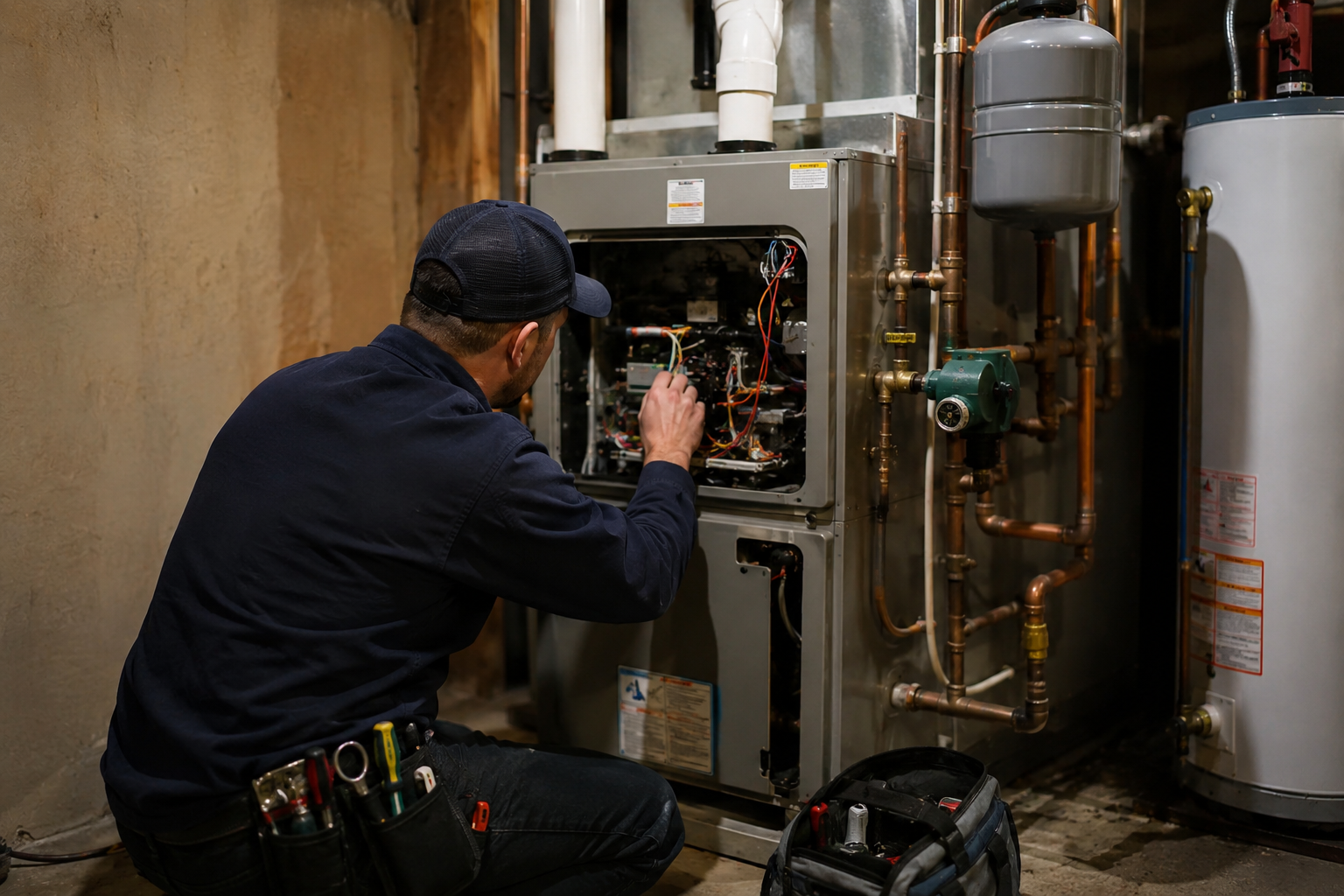
A heating problem can be stressful, particularly during cold weather. A clear process makes it easier to understand what is happening and what comes next.
Start with the symptoms you have noticed. Maybe there is no heat at all, one part of the property stays cold, the boiler is losing pressure, the furnace keeps cycling, or the heat pump is not performing as expected.
The next step is to inspect the relevant equipment and components to identify the likely cause of the problem. The specific checks depend on whether the property uses a boiler, furnace, heat pump, radiant system, or another type of heating equipment.
Once the issue has been identified, the next step may involve repair, maintenance, component replacement, or a discussion about replacing aging equipment.
The goal is to choose a solution based on the actual condition of the equipment and the needs of the property rather than assuming every heating problem requires the same response.
Queens contains an enormous variety of residential and commercial buildings, and heating needs can differ significantly from one property to another. Older homes may have boilers and radiators that have served the property for many years. Apartments may use individual heating equipment or systems shared across multiple units. Newer homes may rely on furnaces, heat pumps, or ductless systems.
Commercial spaces can present their own challenges, including different operating schedules, larger areas, multiple comfort zones, and equipment serving spaces with different uses.
A heating solution should take those differences into account. The system type, building layout, existing infrastructure, property size, comfort concerns, and usage patterns can all affect how a heating problem should be approached.
Queens HVAC Heating is based at 103-14 Metropolitan Ave in Forest Hills and serves homes and businesses throughout Queens. Our local base puts us close to communities across central Queens while allowing us to support customers throughout the wider borough.
We provide services for boilers, furnaces, heat pumps, radiant heating systems, ductless mini-splits, and other heating equipment. The exact service depends on the system type and the problem being experienced.
Possible causes include thermostat problems, restricted airflow, circulation issues, equipment faults, inadequate system performance, heat loss, or problems with individual components. The actual cause depends on the type of heating system and property.
Common warning signs include no heat, uneven temperatures, unusual noises, frequent cycling, weak airflow, boiler pressure loss, cold radiators, unexplained increases in energy use, and repeated breakdowns.
The decision depends on the equipment's age, overall condition, repair history, parts availability, efficiency, comfort performance, and the cost and nature of the current problem. Age alone does not automatically determine whether replacement is necessary.
Maintenance requirements vary by equipment type and manufacturer recommendations. Regular professional maintenance, particularly before periods of heavy winter use, can help identify developing problems and provide a clearer picture of the system's condition.
Yes. We provide dedicated boiler repair, installation, and maintenance services for properties throughout Queens.
Yes. Our heating services include dedicated solutions for furnaces and heat pumps, including repair, maintenance, and installation.
Do not attempt to diagnose or repair the equipment yourself. Leave the affected area and contact the appropriate emergency service or utility provider. A suspected gas leak or carbon monoxide problem should be treated as a potential safety emergency.
If your heating system has stopped working, is struggling to maintain comfortable temperatures, or has become increasingly noisy or unreliable, it may be time to have the equipment checked.
Whether your property uses a boiler, furnace, heat pump, radiant system, ductless equipment, or another type of heating system, understanding the cause of the problem is the first step toward finding the right solution.